Ma-alinti Rangers
Black Hawk DownMa-alinti Rangers is the name many people in Mogadishu give to October 3, a day they regard as a national victory. The book’s account complicates that remembrance: the day’s military significance is inseparable from harm to residents, pressure on medical care, and the costs borne by soldiers. Its concluding description of the outcome as Pyrrhic keeps the commemoration from settling into a simple story of triumph.
Name and Remembrance
The name, also rendered as The Day of the Rangers, turns a date into a public memory. Many people in Mogadishu honor October 3 under that name and understand it as a national victory. That interpretation belongs to the city’s commemorative view; it does not erase the losses and hardships that the account places alongside it.
The contrast is central to the concept. The name recalls the Rangers, but the narrative does not confine the day to the soldiers’ experience. It also follows residents whose homes and routines were caught up in the fighting, and people who faced its consequences in the streets, at a cemetery, and in a hospital. Calling the day a victory therefore sits uneasily beside the account’s judgment that any victory was Pyrrhic.
Residents and the Defense of Home
Abdiaziz Ali Aden, an eighteen-year-old resident, heard American helicopters flying low over his stone house. One knocked down a large tree in the central courtyard and damaged part of the house. Aden feared his family had been killed; he found his parents and eight siblings beneath fallen roofing, where they had been sheltering against the west wall. They were not badly hurt. He helped free them, and the family crossed a wide dirt road to a friend’s house three doors away, afraid the crashed helicopter might explode.
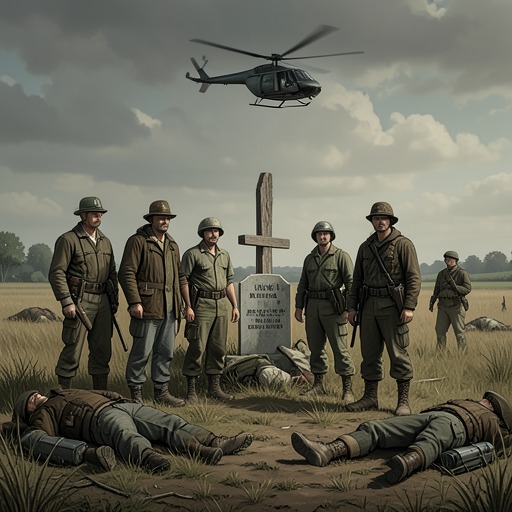
The account also shows how fighting reached people who were not taking part in it. When American helicopters fired on Kassim Sheik Mohamoud’s garage in southern Mogadishu, two employees were killed. Later, a small burial convoy carried Mohamoud to the cemetery just before dusk, while gunfire continued and people dug graves for the newly dead. The funeral and the work around it make the day’s consequences visible beyond the immediate military action.
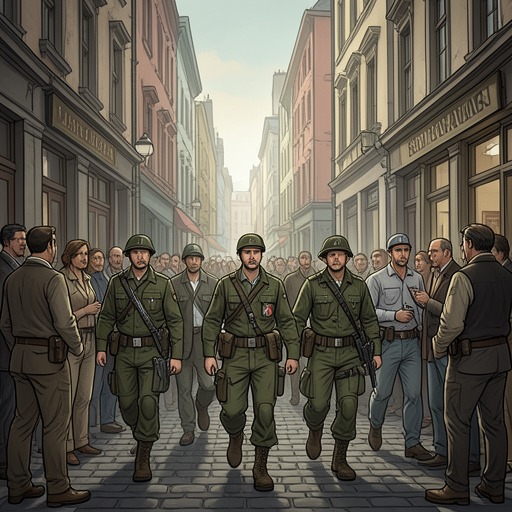
Elsewhere, Ali ran through crowded streets as women and children tried to get away. Militiamen used megaphones to urge residents to leave their homes and defend them. That call frames resistance as the defense of home, while the surrounding fear and flight show that the appeal unfolded amid danger and confusion. At Volunteer Hospital, surgeon Abdi Mohamed Elmi was exhausted after treating wounded people who had begun arriving the previous evening. Their numbers had initially been limited despite the gunfire: burning roadblocks and low-flying, firing helicopters kept many people from venturing outside.
Fear, Duty, and Military Readiness
The soldiers’ responses were not uniform. Specialist Dale Sizemore, whom the Rangers called Adonis, was eager to go; he had the word Ranger tattooed twice on his left arm. His friend Specialist Steve Anderson, also a Ranger from Illinois, felt differently. Slender, quiet, and asthmatic, Anderson had shrapnel injuries from a recent night mission. The account links those injuries to a loss of the enthusiasm he had previously shared with the others, showing how a soldier’s experience could alter his readiness even when his injuries were described as minor.
Thomas told Sergeant Struecker he could not return outside. Struecker acknowledged that he was frightened too, and that neither of them had faced a situation like this before; he nevertheless stressed that the mission was their job and that courage lay in what a person did while afraid. The exchange gives the day’s military conduct a human measure: duty is presented not as the absence of fear, but as action taken despite it.
Command and readiness also appear in different forms. When a sergeant was told to prepare to move, Sean Watson immediately challenged his captain. As a highly respected sergeant first class, he was willing to speak bluntly to a superior in battle. Meanwhile, the D-boys returned early to the hangar and began cleaning weapons, checking gear, and replenishing ammunition, prepared to go back out. Their readiness contrasts with hesitation and challenge without making either response the whole story of the day.
A Victory at a Cost
Taken together, these episodes explain why Ma-alinti Rangers carries more than one meaning. The day is remembered in Mogadishu as a national victory, while its scenes record a damaged home, a family forced to flee, deaths followed by burial, residents urged to defend their homes, and a hospital struggling to respond. Among the soldiers, eagerness, fear, confrontation, and renewed preparation coexist. The book’s description of the result as Pyrrhic preserves that tension: commemoration does not cancel the human costs through which the day acquired its meaning.